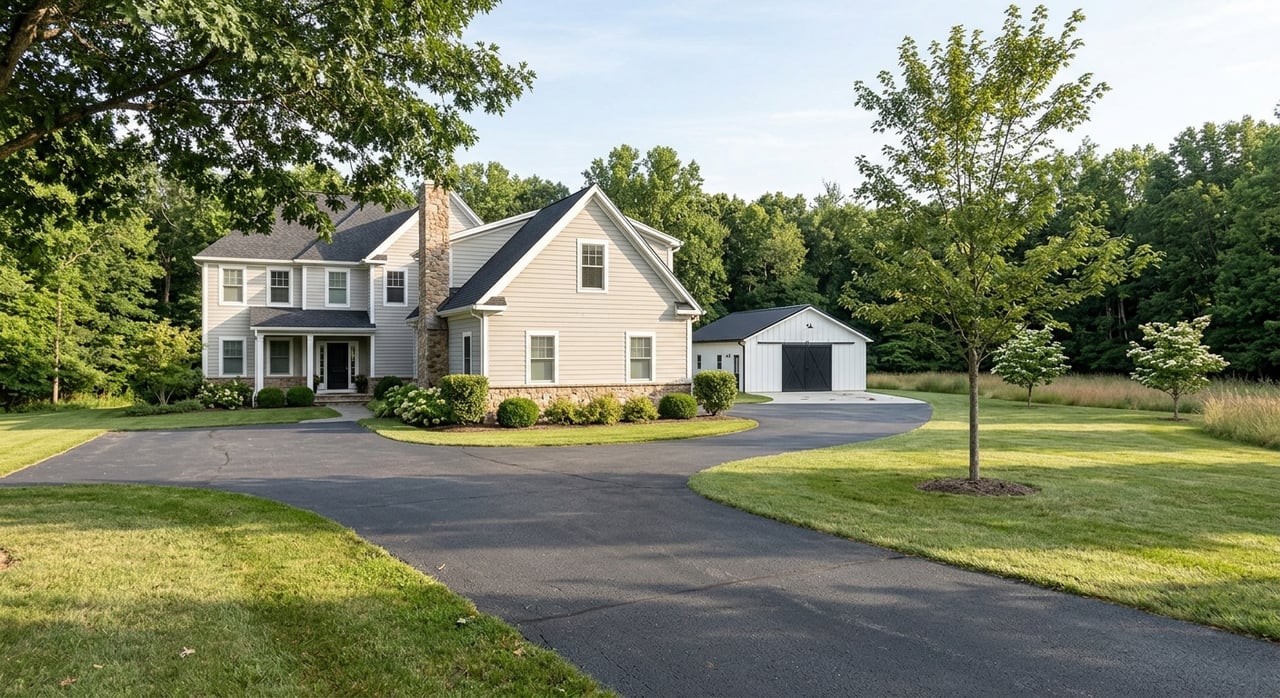
Wondering if buying a home with land in South Harrison Township will give you the space and flexibility you want? You are not alone. Many buyers are drawn to larger lots for privacy, outdoor living, storage, or future farm use, but land purchases come with extra rules and inspections that can change what is truly possible. This guide will walk you through what to know before you buy so you can move forward with more clarity and confidence. Let’s dive in.
Why South Harrison attracts land buyers
South Harrison Township appeals to buyers who want a rural setting without feeling disconnected from the region. The township has more than 3,000 residents across roughly 15 square miles and describes itself as a community with a strong agricultural history.
Location also plays a big role in its appeal. According to the township, South Harrison is fewer than 30 miles from Philadelphia and offers access to Routes 295, 45, and 55. For many buyers, that combination of open space and regional road access is what makes this area stand out.
The township’s zoning framework also reflects its rural identity. Its Agricultural Residential district is designed to respect and promote that character and encourage the continuation of commercial agricultural operations. The code also recognizes the right to farm as a permitted use in all zones.
Know what the zoning allows
When you buy a property with land, the usable space matters just as much as the number of acres. In South Harrison, zoning rules affect what you can build, where you can place it, and how much of the lot can be covered.
The township divides land into several zoning districts, including AR, NC-1, LI, and PO/R. The official zoning map on file with the township clerk is the reference for current zoning, and the Joint Land Use Board reviews development applications, variances, appeals, and ordinance interpretations.
AR lot rules can shape your plans
In the AR district, the minimum lot area is one acre. The minimum lot width is 150 feet, and the minimum lot depth is 200 feet.
Setbacks are also important. Front setbacks are 75 feet from local roads and 100 feet from state or county roads, while rear setbacks are 50 feet and side setbacks are 20 feet on each side. Maximum building coverage is 10%.
That means a large lot may still have a smaller usable building envelope than you expect. If a parcel is narrow, irregular, or heavily constrained by setbacks, your options for additions, garages, barns, pools, or future improvements may be more limited than the acreage suggests.
Do not assume a second dwelling is allowed
One common mistake buyers make is assuming land automatically gives them room for multiple homes. In South Harrison, the code generally limits a lot to one residential building, except for a farm-labor exception.
If you are thinking about a guest house, separate in-law cottage, or another detached living space, it is important to verify what is actually allowed before your offer becomes firm. This is one of the biggest reasons land purchases need careful pre-offer review.
Plan carefully for sheds, barns, pools, and fences
Acreage often brings bigger plans for outdoor use. You may be picturing a detached garage, a shed, a barn, a pool, or fencing for privacy, but each of those features may be regulated.
Accessory uses must stay on the same lot and within the same zoning district. The township also does not issue a permit for an accessory building before the principal building permit is issued.
Accessory structures have placement rules
Storage sheds in residential districts may sit within 10 feet of side and rear yards, but they still must respect front-yard setbacks. That can affect where a shed, detached garage, or other outbuilding can go.
If you are buying with future improvements in mind, ask for permits and plot plans for anything already on the property. You will also want to understand how much lot coverage is already used.
Fences and pools have their own standards
If privacy is part of your goal, fence rules matter. In South Harrison, fences within 50 feet of a public right-of-way or within a residential front yard may not exceed four feet in height, and visible fences must be designed to fit the surrounding area.
Pools and similar recreational facilities must also meet setback and screening rules. The code sets a 25-foot rear setback for pools, including equipment, decking, and fencing immediately around the pool.
Driveway and garage layout matter
On larger lots, buyers sometimes focus on acreage and forget about function. In the AR district, side-entry garages are encouraged when lot geometry permits, and houses on lots under four acres must have paved driveways.
These details can affect how a home sits on the lot, how much turning space you have, and whether a future barn or garage will fit the way you imagined. A property can look spacious at first glance and still require careful layout planning.
Buying with horses or farm use in mind
If you are hoping for horses, livestock, or a more active agricultural use, the property needs even closer review. South Harrison’s code says farm and agricultural uses must be on a lot of at least five acres.
The code also states that if a property is not farmland-assessed, barns or shelters for fowl, horses, or livestock must be at least 300 feet from neighboring residential buildings. That makes acreage only part of the story.
You also need to consider assessment status, neighbor proximity, and where structures could realistically be placed. Two properties with the same number of acres may offer very different options depending on layout and surrounding homes.
Wells and septic need serious due diligence
In South Harrison, well and septic review is not just a box to check. For many land purchases, these systems are central to whether the property fits your budget and long-term plans.
Private well testing is required in a sale
New Jersey’s Private Well Testing Act requires testing when property with a potable private well is sold or leased. Both parties must review the results before closing.
NJDEP says the act covers up to 43 parameters, and Gloucester County is one of the counties where mercury testing is specifically required. If a property has a private well, those results deserve the same attention you give the home inspection.
For ongoing ownership, NJDEP recommends annual testing for total coliform, nitrates, and pH. It also recommends five-year testing for PFAS, lead, VOCs, SOCs, iron, and manganese, plus at least one test for arsenic, mercury, gross alpha, and uranium.
County well certification also matters
Gloucester County’s Environmental Health division reviews and inspects newly constructed potable wells. A newly constructed well must be certified before it can be used as a drinking-water source.
If the home has a newer well, or if you are planning new construction, that county process should be part of your review. It is important to confirm records early rather than near closing.
Septic systems require records and review
Gloucester County processes individual septic systems under 2,000 gallons per day. It also requires certification before use for newly constructed systems and county approval for repairs, alterations, and additions.
The county’s 2026 fee schedule lists a real-estate septic inspection review at $300. If you are comparing homes with land, that is one of several practical due diligence costs to keep in mind.
If an addition or change in use could affect wastewater volume, Gloucester County says it must be evaluated before a construction permit is issued. So if you are thinking ahead to a larger home footprint or different property use, septic capacity matters now, not later.
Budget for ongoing septic maintenance
Rural living can bring more independence, but it also brings responsibility. EPA homeowner guidance recommends inspecting septic systems every one to three years and pumping the tank every three to five years.
Even though that is maintenance guidance rather than a local rule, it is still a helpful budgeting baseline for buyers considering a septic-served property. Regular upkeep protects both function and long-term costs.
Smart steps before you make an offer
When you buy a home with land in South Harrison Township, pre-offer homework can save you from expensive surprises. A beautiful property may not support the use you have in mind unless the zoning, lot layout, and utility systems all line up.
Here are a few smart steps to take before moving forward:
- Confirm the exact zoning district using the township’s official zoning map.
- Ask for a current survey and plot plan, especially for larger or irregular parcels.
- Review septic records, well test results, and permits for sheds, barns, fences, pools, and additions.
- Verify whether the property’s layout supports your intended use, not just whether the total acreage sounds sufficient.
- If you plan to build, add a barn, or change the use, consult the township zoning officer or Joint Land Use Board before the offer becomes firm.
If the parcel is near a zoning boundary, or crosses a municipal boundary, your review becomes even more important. The zoning officer determines disputed district lines, and special rules may apply to lots that straddle municipal lines.
In those cases, buyers should verify that the South Harrison portion of the lot satisfies township lot-size and yard rules and that the principal building fronts a public street in South Harrison. This is exactly the kind of issue that can be missed without early due diligence.
Why local guidance helps on land purchases
Buying a home with land is different from buying a standard suburban lot. There are more moving parts, more records to review, and more reasons to ask detailed questions before you commit.
In a market like South Harrison Township, local knowledge matters because every parcel is a little different. The shape of the lot, road frontage, existing structures, well and septic history, and intended use all need to be looked at together.
That is where an experienced local team can help you slow down, ask the right questions, and avoid assumptions. The goal is not just to find land. It is to find a property that actually works for the way you want to live.
If you are thinking about buying a home with land in South Harrison Township, working with a team that knows Gloucester County can make the process feel much more manageable. Connect with Pat Settar for thoughtful, local guidance as you explore your options.
FAQs
What should you check before buying land in South Harrison Township?
- Confirm zoning, review the survey and plot plan, ask for well and septic records, and verify permits for any existing sheds, barns, pools, fences, or additions.
Can you add a shed or detached garage on a South Harrison Township property?
- Possibly, but accessory structures must follow township zoning rules, must stay on the same lot and in the same zoning district, and still need to meet setback and coverage requirements.
Can you have horses or livestock on a property in South Harrison Township?
- Possibly, but the township code says farm and agricultural uses must be on at least five acres, and additional setbacks may apply depending on assessment status and nearby residential buildings.
Do private wells need testing when buying a home in Gloucester County, New Jersey?
- Yes. New Jersey’s Private Well Testing Act requires testing when a property with a potable private well is sold or leased, and both parties must review the results before closing.
Why does septic review matter when buying a home with land in South Harrison Township?
- Septic review matters because Gloucester County requires approval for certain repairs, alterations, and additions, and any planned change that affects wastewater volume may need evaluation before permits are issued.