1,734 people live in MICKLETON, where the median age is 46.6 and the average individual income is $60,786. Data provided by the U.S. Census Bureau.
Total Population
Median Age
Population Density Population Density This is the number of people per square mile in a neighborhood.
Average individual Income
Mickleton is the kind of place that confuses map apps and rewards the people who actually live here. Type the name into a search bar and you'll get a ZIP code, a scattering of listings, and very little sense of what the village actually is — a 2-square-mile pocket of preserved farmland, 18th-century Quaker brick, and executive-home cul-de-sacs sitting quietly between the Commodore Barry Bridge and the New Jersey Turnpike.
What makes Mickleton worth understanding as a buyer is the range packed into that small footprint. On the same afternoon you can tour a 1790s farmhouse on Kings Highway with original beams and two acres of shade trees, then drive four minutes to a 2008 colonial with a three-car garage in a subdivision that didn't exist when that farmhouse turned 200. Both are Mickleton. Both feed into the same schools. They just attract very different buyers, and the price gap between them is often smaller than people expect.
This guide walks through what the village is, how the housing stock breaks down, where the boundaries actually fall, and the practical trade-offs — because Mickleton is genuinely excellent for some households and genuinely frustrating for others, and it's worth knowing which one you are before you write an offer.
Mickleton is an unincorporated community and census-designated place inside East Greenwich Township, in southwestern Gloucester County. It has its own ZIP code — 08056 — and its own post office, which serves Mickleton along with much of the surrounding township.
That distinction trips up a lot of out-of-area buyers, so it's worth being direct about it. Mickleton is not its own municipality. New Jersey's township system means smaller villages don't hold independent local government; they exist as named communities within a larger township. Your taxes are assessed by East Greenwich Township. Your township committee meets as East Greenwich. Your recreation programs, your public works, your zoning board — all East Greenwich. Mickleton is the address, the identity, and the school-boundary reality, but the governing body sits one level up.
Practically, this means a few things when you're house hunting:
Geographically, Mickleton sits along the Kings Highway corridor at roughly 39°47'N, 75°14'W, covering about 2.07 square miles. It's inland from the Delaware River, south of I-295, and north of Route 322 — which is precisely why it commutes as well as it does.
Mickleton's history is not decoration. It's the reason the village looks the way it does today, and it directly explains why lot sizes here are what they are.
Before European settlement, the land was Lenape territory. By the early-to-mid 18th century, Quaker families — the Mickles, the Tonkins, the Crafts — had established agricultural farmsteads across the area. The village was known then as Upper Greenwich.
Two structures from that era still anchor the village core. The Bodo Otto House (c. 1725) at 522 Kings Highway was home to Dr. Bodo Otto Jr., a surgeon for the Continental Army during the Revolutionary War. The Upper Greenwich Friends Meetinghouse (1799) was built on land donated by Samuel Mickle and Samuel Tonkin, and remains the physical and cultural center of the village's Quaker heritage.
In 1809, the Quakers built the Upper Greenwich Friends School — the building locals still call the Little Red Schoolhouse. It educated generations of farm children and is listed on the National Register of Historic Places.
The village got its modern name almost by accident. In 1869, the Swedesboro Branch of the West Jersey Railroad ran track through the community. Because another Greenwich already existed nearby, rail authorities demanded a distinct name to prevent routing errors. The village became Mickleton, after the Mickle family — with local lore crediting storekeeper S. Mickle Ogden, who reportedly watched the station go up.
When East Greenwich Township formally incorporated in 1881, Mickleton was folded in as one of its core villages.
Through the 20th century, Mickleton shifted from working agricultural hamlet to suburban residential community. But that shift happened slowly, and it happened around a preserved core rather than over it. Gloucester County saw enormous residential growth in the 1990s and 2000s — Woolwich Township, just south, was for a time one of the fastest-growing municipalities in the country — and Mickleton absorbed some of that. What it didn't do was erase Kings Highway. The brick meetinghouse, the farmhouses, and the open space are still there, which is why the village reads as historic rather than as generic South Jersey suburbia.
The 08056 market is overwhelmingly single-family detached, owner-occupied housing. There is very little multifamily stock, limited townhome or condo inventory, and almost no rental supply of consequence. If you want to live in Mickleton, you're almost certainly buying a house on land.
Median home value currently runs in the $600,000 to $720,000 range, though that figure varies meaningfully with age, square footage, and acreage. The market breaks into three fairly distinct tiers:
Price Band | What You're Typically Getting |
|---|---|
$350,000 – $450,000 | Older historic homes along Kings Highway; smaller mid-century split-levels and ranches. Often the best value in the village, frequently needing updates. |
$500,000 – $700,000 | Mid-sized four-bedroom colonials and homes in the suburban tract developments. The heart of the market and where most transactions happen. |
$750,000 – $1,000,000+ | Modern executive estates, custom builds, and properties carrying agricultural acreage. |
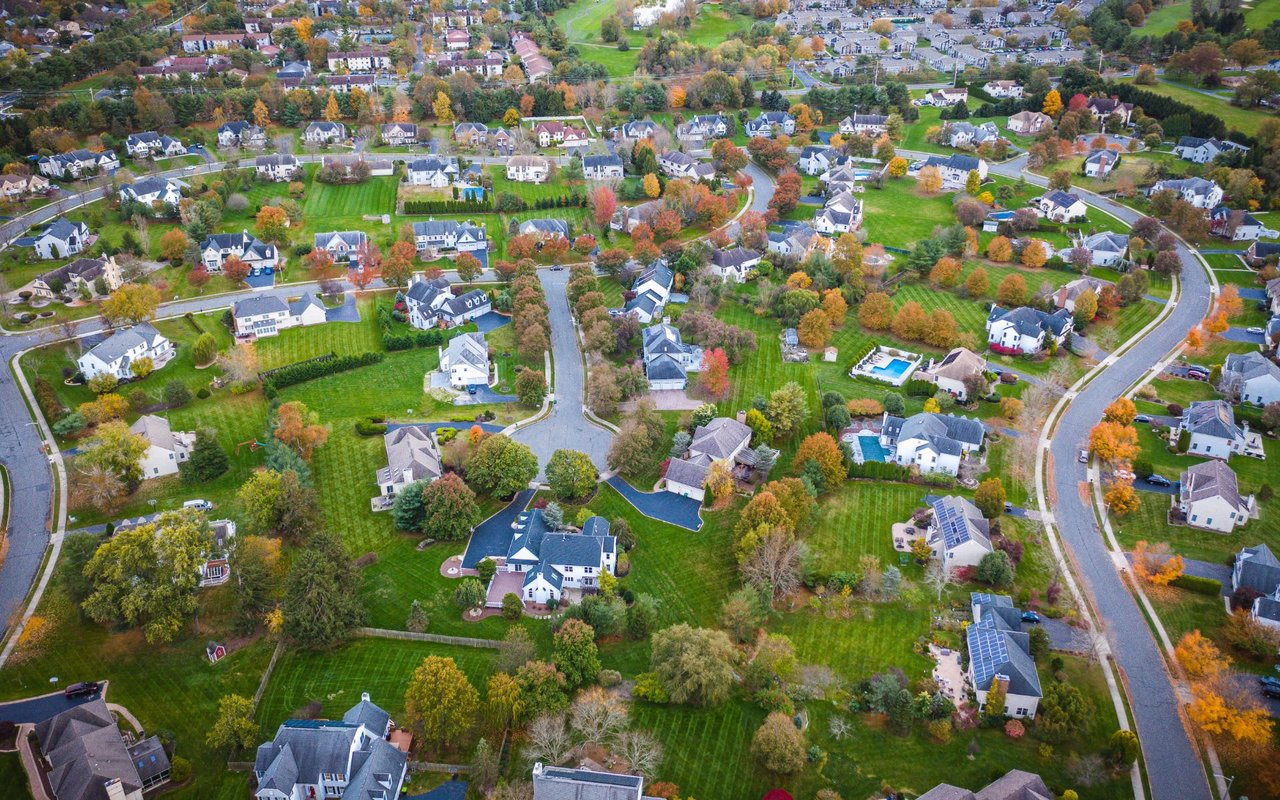
Lot sizes are the real story. Where much of eastern Gloucester and neighboring Camden County packs homes onto quarter-acre parcels, Mickleton's baseline is 0.5 to 2+ acres, and farmstead or custom-build properties routinely run 5 to 20+ acres. For buyers coming from Cherry Hill, Deptford, or the Philadelphia suburbs, that difference is usually the single most striking thing about a tour day.
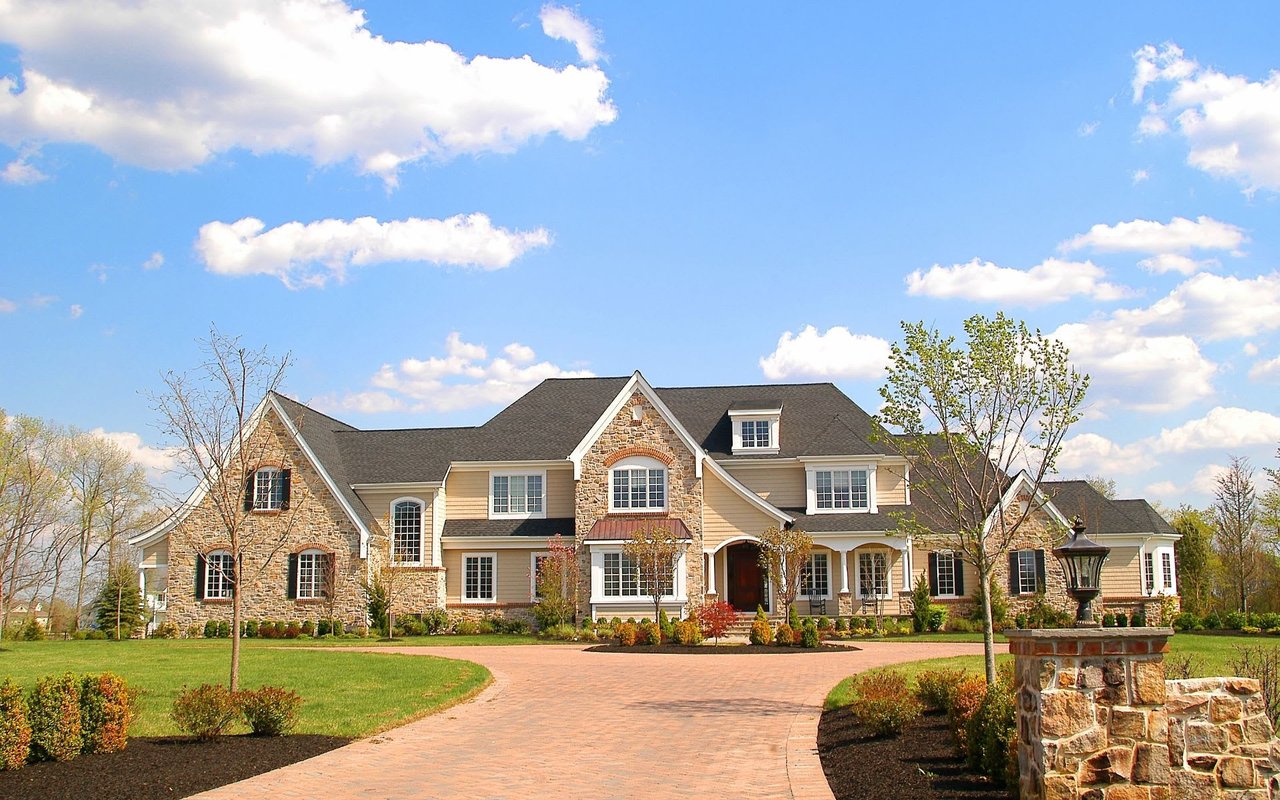
Colonial Revival and traditional two-story homes dominate the newer subdivisions — brick or vinyl facades, three to five bedrooms, two- and three-car garages, open floor plans. These are the most liquid properties in the village and generally the fastest to sell.
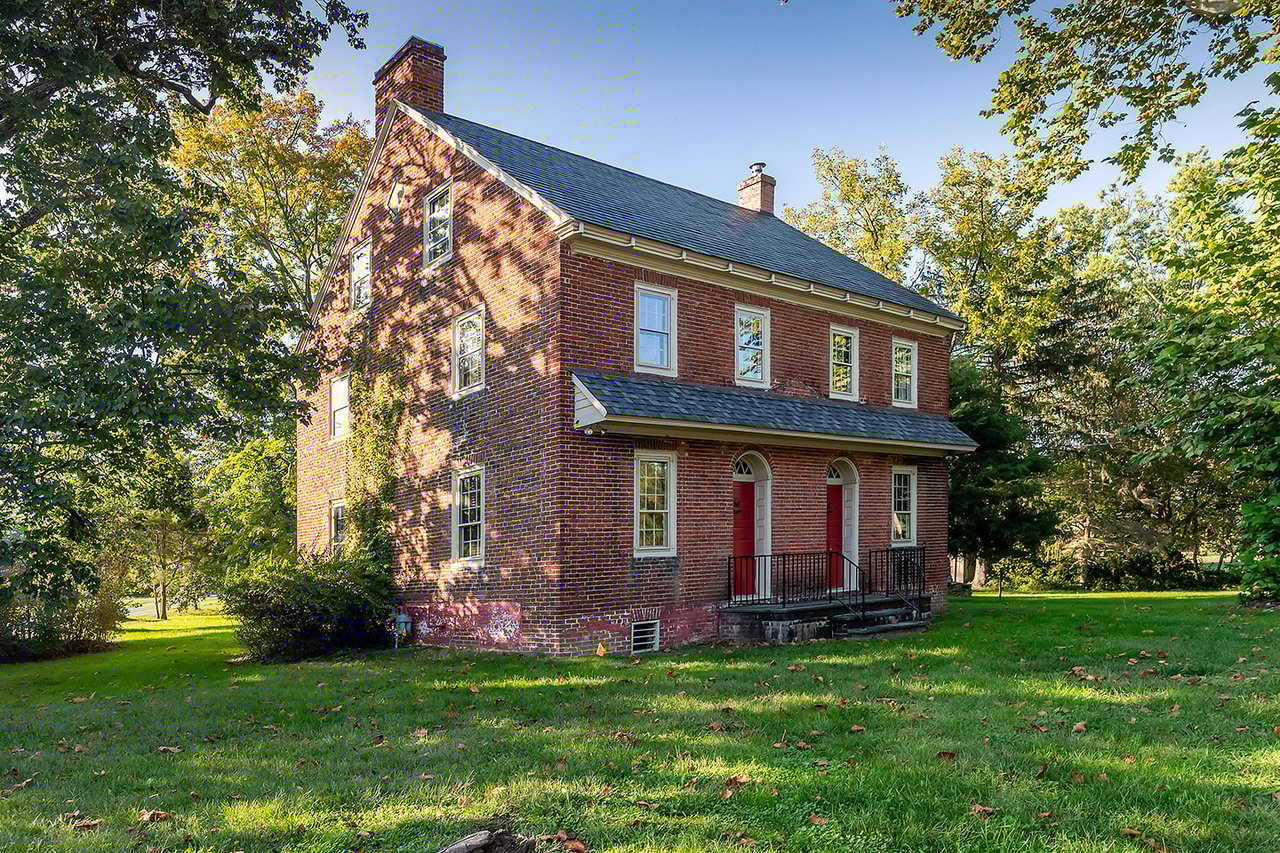
Historic farmhouses and Quaker Colonials line Kings Highway, Democratic Road, and Cohawkin Road. The range runs from 18th-century brick construction to 19th-century Victorian farmhouses. These homes carry real character and real maintenance obligations — inspection scope on a 200-year-old property is a different exercise entirely, and it's worth budgeting for both the inspection and what it finds.
Ranches and split-levels are scattered through the mid-century subdivisions. These draw single-story buyers, downsizers, and anyone who wants Mickleton acreage without Mickleton's upper price tier.
Custom estate homes — 3,500+ square feet on private acreage or estate cul-de-sacs — make up the top of the market. Inventory here is thin and moves on its own timeline.
A note on inventory: Mickleton is small. Two square miles of predominantly large-lot single-family housing does not generate a lot of listings in a given month. Buyers who want a specific style, a specific street, or a specific acreage should expect to wait for the right property rather than choose among several.
Mickleton's residential geography splits cleanly in two, and understanding the split is the fastest way to narrow your search.
Kings Highway — County Route 551 — is the village's spine and its historic core. Homes along and just off it include early Colonial properties, 19th-century farmhouses, Craftsman bungalows, and mid-century infill built into gaps between the old parcels.
The feel here is distinct: mature shade trees, deep setbacks, and enough density around the Friends Meetinghouse and Little Red Schoolhouse that it's genuinely walkable in that small pocket. This is where Mickleton looks and feels like a village rather than a subdivision. It's also where you'll find Samuel Mickle School and Haines Pork Shop, which means a share of daily life actually happens on foot or in a two-minute drive.
The trade-off is that Kings Highway is a working county road. Properties directly fronting it get traffic noise that properties a street back do not, and buyers sensitive to road noise should tour at rush hour rather than midday.
Residential expansion from the late 20th century onward converted former farmland into planned developments, and these fall into two rough generations.
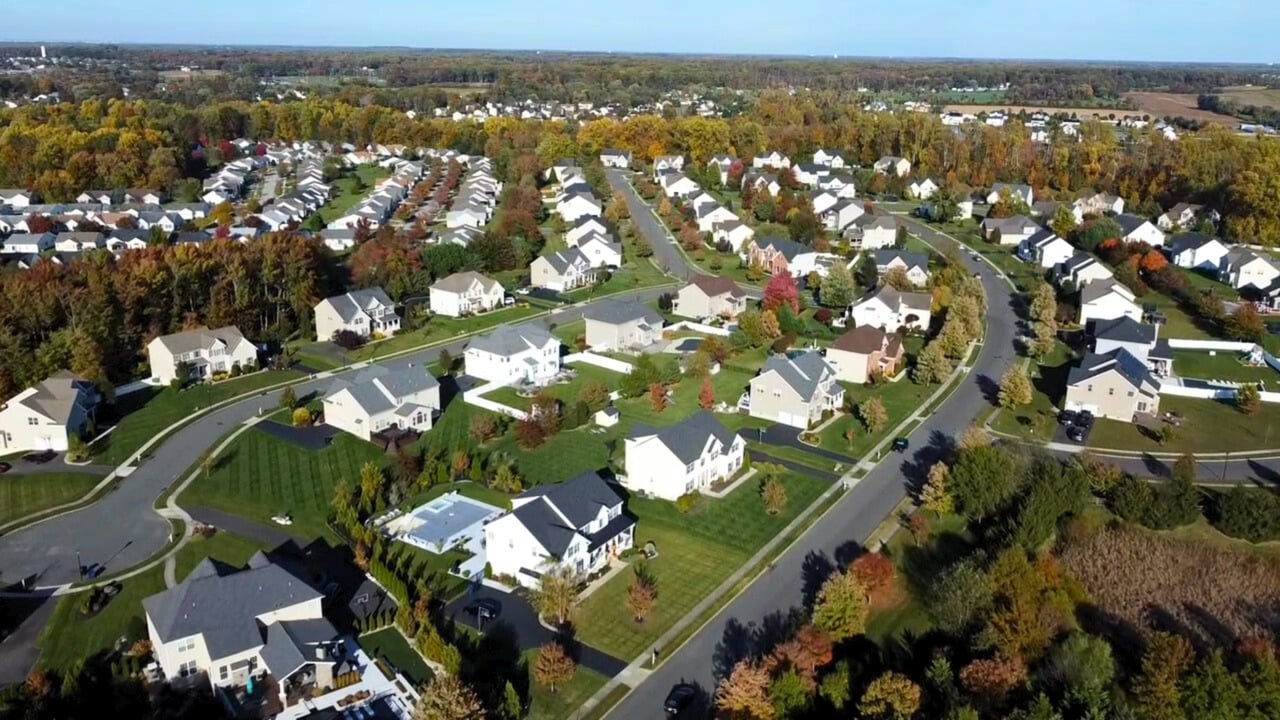
Estate and executive developments — the Providence Road area, Nicole Drive, and the extensions off Wolfert Station Road — were built primarily from the 1990s through the 2010s. Large detached homes, modern systems, generous lots, cul-de-sac layouts. These are what most relocating buyers picture when they imagine Mickleton.
Mid-century through late-20th-century subdivisions along streets like Birch Drive, Gaunt Drive, and Doerrmann Drive offer traditional suburban cul-de-sac living at a more accessible entry point. Older systems, smaller footprints, but the same schools and the same acreage advantage.
In practice, buyers tend to self-select quickly: people who want character and history gravitate to the corridor, people who want turnkey square footage gravitate to the subdivisions, and people watching budget find the best value in the older cul-de-sac streets.
School quality is one of the top two reasons families choose Mickleton, so it's worth laying out the structure precisely. Students move through two separate districts depending on grade level.
East Greenwich Township School District (Pre-K–6) handles the early years. Jeffrey Clark School on Quaker Road covers Pre-K through 2nd grade. Samuel Mickle School — located directly on Kings Highway, inside Mickleton itself — covers grades 3 through 6. Having an upper elementary school physically in the village is a real quality-of-life factor and one of the reasons the corridor has held its appeal.
Kingsway Regional School District (7–12) takes over after 6th grade. Kingsway Regional Middle School (grades 7–8) and Kingsway Regional High School (grades 9–12) share an adjoining campus down Kings Highway in neighboring Woolwich Township. Kingsway pools students from East Greenwich, South Harrison, Swedesboro, Woolwich, and Logan Townships, which gives it the scale to run programming a standalone district of East Greenwich's size could not — strong STEM offerings, a deep AP catalog, and Group IV athletics competing as the Kingsway Dragons.
The practical upshot: your child's classmate pool expands significantly at 7th grade, from a township cohort to a five-township regional one. Some families love that; a few find the transition abrupt. Worth discussing with families already in the system when you tour.
As with anything school-related, boundaries and assignments can change. Confirm current placement with the districts directly before making a decision that hinges on it.
This is Mickleton's quiet superpower. The village sits at a highway intersection that very few semi-rural communities can match, which is exactly why professionals working in three different states can live here.
Interstate 295 is the primary north–south artery, with access points nearby at Exits 16–18. North takes you toward Deptford, Cherry Hill, and the Philadelphia bridges; south runs to Delaware.
U.S. Route 322 crosses just south of the village and serves as the major east–west commercial corridor — Glassboro and Rowan University to the east, Pennsylvania to the west via the Commodore Barry Bridge.
New Jersey Turnpike Exit 2 sits minutes away in Woolwich Township, opening up Central and North Jersey and New York.
Destination | Route | Off-Peak Drive |
|---|---|---|
Center City Philadelphia | I-295 N to Walt Whitman Bridge | 25–35 min |
Wilmington, DE | I-295 S or Rt 322 W over Commodore Barry to I-95 | 25–30 min |
Philadelphia Int'l Airport (PHL) | Rt 322 W to I-95 N | 20–25 min |
Rowan University (Glassboro) | Rt 322 E | 15–20 min |
Cherry Hill / Marlton | I-295 N | 25–35 min |
Twenty to twenty-five minutes to a major international airport, from a village with working farms in it, is not a common combination.
For transit riders, NJ Transit Bus Line 401 runs along Kings Highway through Mickleton, connecting Swedesboro, Mickleton, and Woodbury to the Walter Rand Transportation Center in Camden — where you can pick up the PATCO Speedline into Philadelphia. It's a viable car-free commute for some, but it's a bus route, not a rail line, and it doesn't change the fundamentally car-dependent nature of daily life here.
One honest caveat: these off-peak figures compress nicely, but bridge traffic is bridge traffic. Add real time to the Walt Whitman and Commodore Barry crossings during weekday peaks, and check your specific route at your actual commute hour before committing.
For a community this size, the recreational infrastructure is disproportionately good — largely because East Greenwich Township invested in it as the population grew.
Thompson Family Park is the anchor: 60 acres in Mickleton functioning as the township's primary recreation hub. Paved walking and jogging trails, multiple playgrounds, lit tennis and pickleball courts, soccer and baseball fields, and dog parks. The lit courts matter more than they sound — they extend usable hours well past sunset for adult leagues and evening play.
Mickleton Park is the smaller neighborhood option near the historic core, with a playground, open pavilion, and tennis courts. Hidden Acres Park, elsewhere in East Greenwich, adds 50 acres of stream-side trails, athletic fields, and picnic areas.
Living here means genuine access to working agriculture, not a farmers market that shows up on Saturdays.
Haines Pork Shop on Kings Highway has operated since 1865 — a local butcher specializing in select pork cuts and house-made sausage. It's a Mickleton institution and one of the few businesses in the village proper.
Maugeri Farms and the surrounding farm stands in Woolwich and Swedesboro are minutes away, offering pick-your-own produce, fall hayrides, and seasonal crops. The Mullica Hill Amish Market, about ten minutes southeast, brings fresh meats, baked goods, produce, and handmade furniture from Pennsylvania Dutch merchants.
This is the piece that's hardest to convey in a listing photo: fall in Mickleton has a rhythm to it — hayrides, corn mazes, farm stands, the Amish market — that families here organize their autumns around.
Let's be straightforward about this section, because it's where Mickleton requires the most adjustment from buyers coming out of denser suburbs.
Mickleton does not have a commercial main street. No grocery store, no strip mall, no cluster of restaurants inside the village. What it has instead is a handful of beloved local spots and a five-to-fifteen minute drive to everything else.
Within the village and immediately around it, Dippy's Ice Cream and the Shamrock Deli function as genuine community gathering points — the places where you run into your neighbors. Nearby in East Greenwich, Death of the Fox Brewing Company (New Jersey's first combined coffee roastery and craft brewery) and Cinder Bar have become regional draws.
For walkable dining and browsing, the historic downtowns of Swedesboro and Mullica Hill both sit within a short drive, offering farm-to-table restaurants, Italian bistros, bakeries, antique shops, and casual pubs.
Everyday errands break down by distance:
The honest framing: you will not walk to dinner in Mickleton, and you will keep a car for every errand. What you get in exchange is that none of that commercial activity is happening on your street.
Mickleton's social fabric runs on three threads: Quaker heritage, youth athletics, and farm-and-food culture. They overlap more than you'd expect.
The Little Red Schoolhouse (c. 1809), owned by the Mickleton Friends Meeting, functions today as a public community center — hosting civic meetings, local events, and historical displays. The Mickleton Friends Meetinghouse (c. 1799) remains active on Kings Highway, and the Quaker principles that shaped the village — simplicity, stewardship, open community engagement — still register in how the place operates. The preserved open space and the resistance to overdevelopment aren't accidents of geography.
Farm and food culture is the second thread. Cecil Creek Farm, a 42-acre USDA Certified Organic operation, hosts weekly farm-to-table breakfasts, CSA pickups, and seasonal events that draw well beyond the village. For a lot of newer residents, a CSA share is the fastest way into the local social network.
The third thread, and for families with kids the dominant one, is organized youth activity. East Greenwich Parks & Recreation runs township programming year-round — holiday tree lightings, seasonal parades, outdoor movie nights at Thompson Family Park. Youth sports carry enormous weight: the East Greenwich Soccer Association, East Greenwich Little League, and the regional wrestling and cheer organizations. If you move here with school-age children, your weekends will likely reorganize around these fields, and that's how most transplant families make their first real friendships.
The East Greenwich Fire District (Station 191) runs substantially on volunteer involvement, which produces the kind of deep, intergenerational community roots that are increasingly rare in growing suburbs. You'll meet families whose grandparents ran calls out of the same station.
After enough tours in this market, patterns emerge about who ends up happy here.
Growing families are the clearest fit — households wanting four-plus bedrooms, half an acre to two acres of private yard, and a clean path through East Greenwich elementary into Kingsway Regional. The combination of space and school quality is the core Mickleton proposition.
Tri-state commuters are the second group: professionals working in Philadelphia, Cherry Hill, or northern Delaware who want a quiet buffer at the end of the day without a punishing drive. A 20-to-30-minute commute into three different metro job markets from a village with farmland in it is genuinely hard to replicate elsewhere in the region.
Privacy and outdoor-space seekers round it out — buyers who want room for an inground pool, a detached workshop, serious gardens, or the character of a working farmstead property.
What Works | What to Weigh |
|---|---|
Larger lots than dense Camden County or eastern Gloucester suburbs — space is the defining feature. | Fully car-dependent. Every grocery run, school pickup, and dinner out involves driving. |
Direct feeder into Kingsway Regional, with the programming depth a five-township district supports. | New Jersey property taxes. Annual bills run high relative to national norms; get actual figures on any property you're serious about. |
Preserved farmland, 110+ acres of township park space, and a genuinely low-density environment. | No walkable commercial core, no nightlife in the village. Social life is organized, not spontaneous. |
Immediate access to I-295, Route 322, the Commodore Barry Bridge, and Turnpike Exit 2. | Thin inventory and rising prices. Demand for large-lot single-family housing here consistently outpaces supply. |
Two additional considerations that don't fit neatly in a table. First, if you're drawn to the historic homes along Kings Highway, budget properly for both a specialist inspection and the work it will surface — these are wonderful properties owned by people who understand what they take. Second, if walkability and spontaneous street life are high on your list, Mickleton will likely disappoint you, and Mullica Hill's or Swedesboro's downtown cores are probably a better match for the same commute.
Mickleton rewards local knowledge. Inventory is thin, listings are split between "Mickleton" and "East Greenwich Township" in the MLS, and the difference between a well-priced farmhouse on Kings Highway and one that will consume your next three years isn't visible in the photos. That's where having someone who has actually walked these streets matters.
Pat Settar has lived in Harrison Township for 31 years, raising three daughters — Meryl, Carly, and Paige — through the local schools alongside her husband Mike. That's not a marketing line; it's three decades of watching this corner of Gloucester County change, and knowing which changes stuck. Pat chairs the Harrison Township Beautification Committee, supports the Harrison Township Historical Society, and sponsors Harrison Township Day and Lights on Main each year.
Professionally, Pat ranks in the top ½% of the BHHS network, appears in Philadelphia Magazine's Who's Who for Top Producers, and has earned the Platinum Award from the Board of Realtors®. The honor she values most is the Don Brogan Peer Appreciation Award, given by her peers at the Gloucester/Salem Counties Board of Realtors® for ethical standards, cooperation with other agents, and depth of professional knowledge. She's built an all-female team she's proud to mentor, and the Pat Settar Team holds a 5-star rating on Zillow.
Whether you're touring Mickleton for the first time, weighing it against Mullica Hill or Woolwich, or preparing to list a home here, the team is glad to help — no pressure, just straight answers about the market.
The Pat Settar Team | BHHS Fox & Roach, Realtors®
157 Bridgeton Pike, Mullica Hill, NJ 08062
(856) 297-5790 · [email protected]
Find us on Facebook, Instagram, LinkedIn, YouTube, and Zillow.
There's plenty to do around MICKLETON, including shopping, dining, nightlife, parks, and more. Data provided by Walk Score and Yelp.
Explore popular things to do in the area, including Salon Giovanina.
MICKLETON has 723 households, with an average household size of 2.4. Data provided by Statistics Canada. Here’s what the people living in MICKLETON do for work — and how long it takes them to get there. Data provided by Statistics Canada. 1,734 people call MICKLETON home. The population density is 848.64 and the largest age group is Data provided by Statistics Canada.
Total Population
Population Density Population Density This is the number of people per square mile in a neighborhood.
Median Age
Population by Age Group
0-9 Years
10-19 Years
20-24 Years
25-64 Years
65-74 Years
75+ Years
Education Level
Total Households
Average Household Size
Average individual Income
Households with Children
With Children:
Without Children:
Marital Status
Blue vs White Collar Workers
Blue Collar:
White Collar: