By The Pat Settar Team
Homeowners across Harrison Township are rethinking their kitchens at a steady pace, whether they live inside Mullica Hill's historic district or in one of the newer developments nearby. A single project touches plumbing, electrical work, cabinetry, and sometimes permits, so the planning stage matters as much as the finishes.
Local contractors who work regularly in the area know which details tend to catch homeowners off guard, from historic-district paperwork to appliance rebates. What follows is a practical starting point for anyone weighing a remodel this year.
Key Takeaways
- Historic district rules: exterior changes within Mullica Hill's historic boundary need a Certificate of Appropriateness before a permit is issued.
- Standard permits: most interior kitchen work still requires a permit from Harrison Township's Construction Code Office under New Jersey's Uniform Construction Code.
- Local design-build firms: several area contractors, including Ayars, have completed open-concept kitchen projects in Mullica Hill.
- Energy rebates: New Jersey's Clean Energy Program offers rebates on qualifying energy-efficient appliances installed during a renovation.
Historic District Rules for Exterior Kitchen Changes
Homes inside Mullica Hill's historic district fall under a boundary that covers Main Street along with East Avenue, Union Street, Glassboro Road, East Church Street, and High Street. Harrison Township's Historic Preservation Commission reviews any exterior change within that boundary before a building permit moves forward.
What Typically Requires Commission Review
- Additions and bump-outs: a rear addition that expands a kitchen's footprint needs a Certificate of Appropriateness before construction starts.
- Visible windows and doors: replacing windows or doors visible from the street falls under the commission's review, even for interior-driven projects.
- Rooflines and materials: changes to roof pitch, siding, or exterior materials require approval to keep the block's historic character intact.
The seven-member commission generally issues a decision within 45 days of a completed application. Projects limited to the interior, like new cabinets or countertops, typically skip this review entirely.
Standard Permits Through Harrison Township
Most interior kitchen projects still need a standard construction permit even outside the historic boundary. Harrison Township's Construction Code Office issues these permits under New Jersey's statewide Uniform Construction Code.
Work That Usually Triggers a Permit
- Electrical upgrades: added circuits, new outlets, or a panel upgrade to support modern kitchen appliances.
- Sink and gas connections: relocating a sink, dishwasher line, or gas connection for a range.
- Structural work: removing a wall between the kitchen and an adjoining room to open the floor plan.
A licensed contractor generally pulls these permits as part of a full-service project. Homeowners tackling smaller updates on their own should confirm requirements with the township before starting demolition.
How to Choose an Architectural Style That Fits the Neighborhood
Homes along Main Street and the surrounding historic blocks lean toward Federal and Victorian details, while newer sections of Harrison Township favor a more contemporary farmhouse look. A kitchen that echoes the home's existing architecture tends to feel more cohesive and holds its value better at resale.
Design Choices That Read as Cohesive
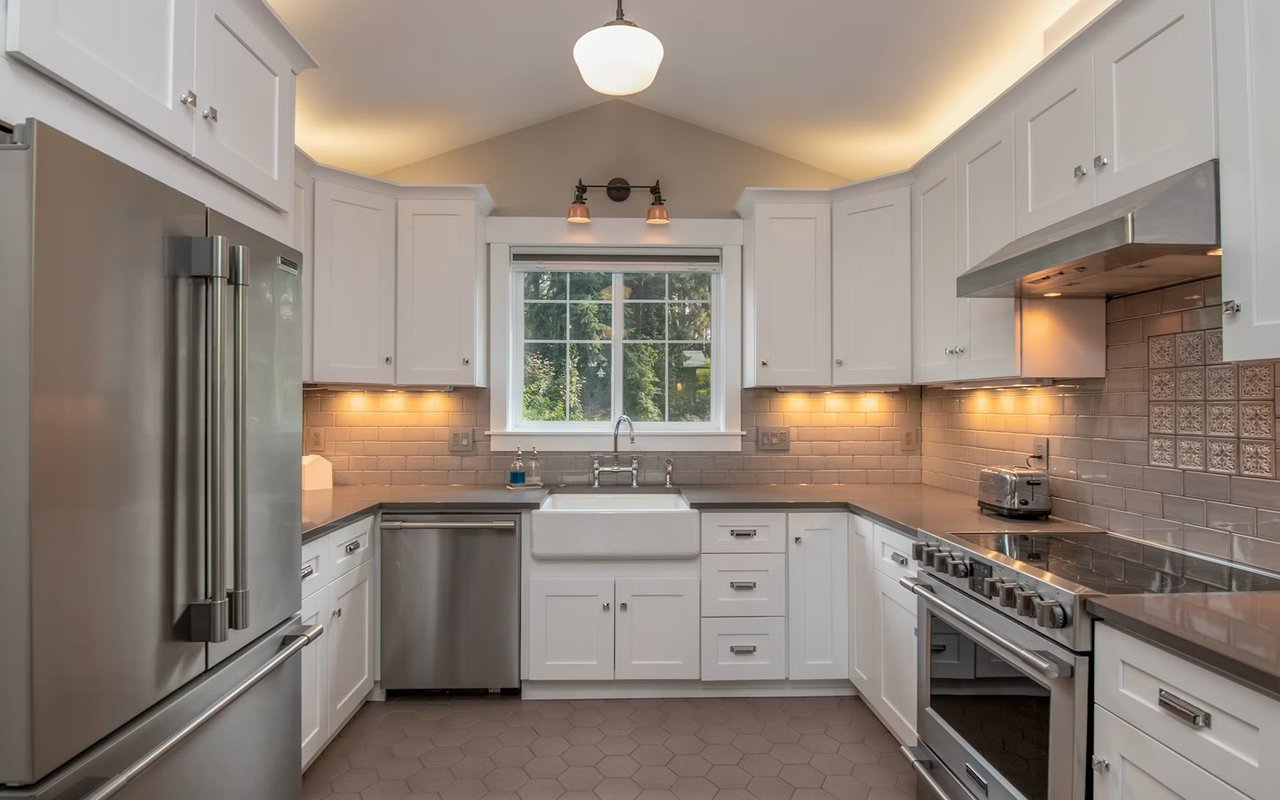
- Historic-district homes: paneled cabinetry, farmhouse sinks, and painted finishes that complement Federal and Victorian trim work.
- Newer construction: larger islands, mixed cabinet finishes, and open shelving suited to a more contemporary floor plan.
- Shared elements: natural stone or quartz counters and warm wood tones that work across both architectural styles.
A local designer familiar with Mullica Hill's mix of housing stock can help match materials to a home's age. Future owners often respond better to finishes that echo a home's exterior era than to any passing trend.
Local Design-Build Firms and Showrooms Worth a Call
Several contractors based in or serving Gloucester County have completed kitchen projects specifically in Mullica Hill, including a documented open-concept remodel by Ayars. A homeowner who requests quotes from more than one local firm can compare timelines, material sourcing, and how each contractor handles historic-district paperwork.
Questions Worth Asking Before Signing a Contract
- Permit responsibility: confirm whether the contractor pulls permits directly or expects the homeowner to file with the township.
- Historic-district experience: ask whether the firm has navigated a Certificate of Appropriateness application before.
- Project timeline: request a realistic schedule that accounts for inspection scheduling through Harrison Township.
References from a recent local project offer a clearer picture than online reviews alone. A short conversation with the Historic Preservation Commission's office can also confirm which approvals a specific project will need.
A Realistic Budget With Local Rebates and Incentives
New Jersey's Clean Energy Program offers rebates on qualifying energy-efficient appliances, which can offset part of a kitchen renovation's cost. A quick review of current rebate categories before finalizing an appliance package helps homeowners avoid missing a credit tied to a specific model.
Costs Worth Planning Around Early
- Permit fees: township permit costs vary by project scope and are separate from any historic-district application fee.
- Energy-efficient upgrades: rebate-eligible appliances and lighting can reduce long-term utility costs beyond the renovation itself.
- Contingency funds: older Mullica Hill homes sometimes reveal outdated wiring or plumbing once cabinets come down.
A cushion set aside beyond the initial estimate helps absorb surprises specific to an older home. Homeowners who budget for the unexpected tend to finish a renovation with less stress than those who plan for a best-case scenario only.
FAQs
What should I know before starting a kitchen renovation Mullica Hill NJ homeowners can rely on?
Costs vary widely based on the scope of work, whether the project touches plumbing or electrical systems, and the finish level chosen for cabinets and counters. Homes inside the historic district may also need to budget time, though not necessarily money, for a Certificate of Appropriateness if the project changes anything visible from the street.
Do I need a permit for a kitchen renovation if I'm not changing the exterior of my home?
Most interior kitchen work involving plumbing, electrical, or structural changes still needs a standard permit from Harrison Township's Construction Code Office. Cosmetic updates like new paint, cabinet hardware, or countertop replacement without plumbing changes typically do not require a permit.
How long does a typical kitchen renovation take in Mullica Hill?
Timelines depend on scope, permit review times, and whether the home falls inside the historic district. A cosmetic update might wrap up in a few weeks, while a full renovation involving structural changes or a Certificate of Appropriateness can take several months from planning to completion.
Reach Out to Us at The Pat Settar Team
Reach out to The Pat Settar Team for guidance on Mullica Hill homes with a kitchen ready for a renovation, whether that means updating a historic property or a newer build.