Search "things to do in South Harrison Township" and you'll be handed a recreation park with chess tables, a gazebo-lined walking trail, and a haunted hayride at a working farm. It sounds like a good afternoon. It's also not in South Harrison.
Ella Harris Recreation Park sits on Commissioners Road in Mullica Hill, inside Harrison Township. Night of Terror, the haunted attraction that shows up in nearly every list of South Harrison happenings, runs out of Creamy Acres Farm, also in Mullica Hill. Both townships share a border, a Kingsway school pathway, and overlapping road names, so online searches for South Harrison activities can include places in its neighbor. If you live off Ferrell Road or along Route 45 in South Harrison proper, some results may describe places outside your township.
South Harrison's smaller footprint is worth understanding on its own terms.
The One Park That's Actually Yours
South Harrison Township has a single listed park: Stewart Memorial Park, at 67 Ferrell Road in Harrisonville. It has a covered picnic shelter, ball fields, and a playground. That's the extent of the township's dedicated recreation footprint. There's no second facility to point to, no indoor complex, no walking trail system separate from what the fields themselves offer.
This isn't a knock on the township. A community of roughly 3,000 residents spread across 16 square miles of farmland was never going to need the recreation infrastructure of a denser suburb. A guide that lists chess tables and gazebo trails as part of "South Harrison living" may instead be describing amenities in Harrison Township. If you're planning a Saturday around what's actually inside your township lines, Stewart Memorial Park is the answer, not a stand-in for something bigger.
A Lake That Belongs to Two Counties
Ask a longtime resident about "the lake" and they mean Harrisonville Lake, an 18-acre body of water that anchors the northwest corner of the township. What most people don't realize is that the lake and the land around it form the Harrisonville Lake Wildlife Management Area, a 298.45-acre tract managed by the New Jersey Division of Fish and Wildlife, and that the WMA doesn't sit entirely inside South Harrison. It straddles the county line, spanning South Harrison Township in Gloucester County and Pilesgrove Township in Salem County.
That matters for anyone who thinks of the lake as a township amenity in the way a borough might think of its own park pond. It isn't managed by South Harrison's recreation department and it isn't exclusively South Harrison's to claim. Stocking schedules, boat launch rules, and seasonal closures come from the state, not the township, and the water itself carries fish, plans, and access rights that belong as much to the next county over as they do here. Anglers come for largemouth bass, chain pickerel, and stocked trout, and NJDEP's own trout listings file the lake under both townships at once. It's a shared resource wearing a single local name.
The Winery Inside a Dry Town
Here's the detail that surprises people who've lived in South Harrison for years: the township is legally dry. Under New Jersey's alcoholic beverage control rules, no retail liquor license can be issued within South Harrison's borders, a restriction that dates back generations and still shows up on the state's list of dry municipalities.
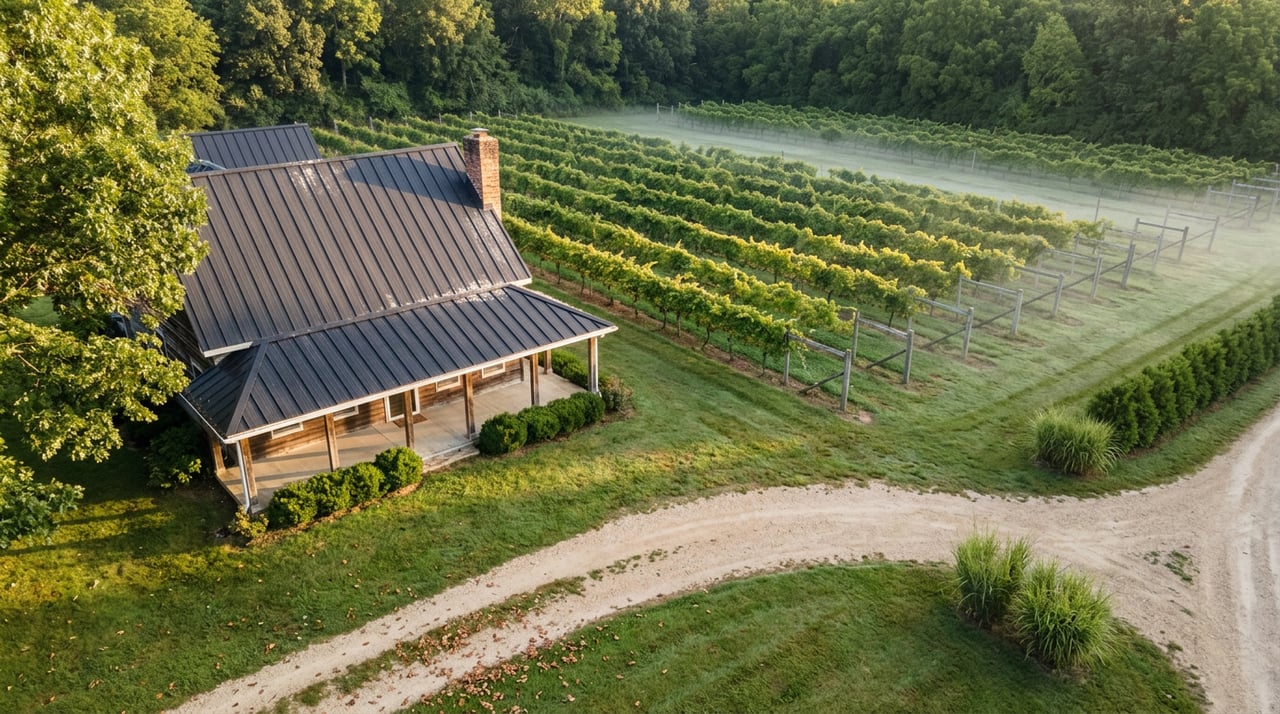
And yet Wagonhouse Winery, at 1401 Route 45, pours wine to visitors every weekend inside township limits. The reason isn't a loophole so much as a different category of law altogether. New Jersey's dry-town restrictions apply to retail liquor licenses, the kind a bar or liquor store needs. Wineries operate under a separate, state-issued plenary winery license, which permits on-site tastings and off-premises sales rooms regardless of what a municipality's own liquor ordinance says. A town can ban the corner bar and still host a working tasting room, because the state, not the township, decides who gets to sell wine grown from the vine.
The winery's story is a genuine South Harrison story, not an imported one. Dan and Heather Brown planted their first grapes in 2004 on land Dan's family had farmed in Mickleton for more than a century. In January 2011 they bought a farm of their own and moved the operation to South Harrison, building a tasting room modeled after, and standing on the exact site of, the original wagon house that gave the winery its name. More than two decades and roughly 30 wines later, the Browns still run it as a family operation, and their second label, Three Boys Brand, is named for their three sons, with sweet wines carrying names like Sure Thing and Sweet Love.
The tasting room keeps public hours on Saturdays from noon to 6 p.m. and Sundays from noon to 5 p.m., with a shuffleboard table inside for anyone not there strictly for the wine list.
What the Smaller Map Actually Tells You
Put these three pieces together and South Harrison's local amenities come into focus. This is a township where the recreation department fits on a single page, where the wildlife management area around the lake at the edge of town crosses township and county lines, and where a winery operates because state law overrides a local ban that's been on the books for decades.
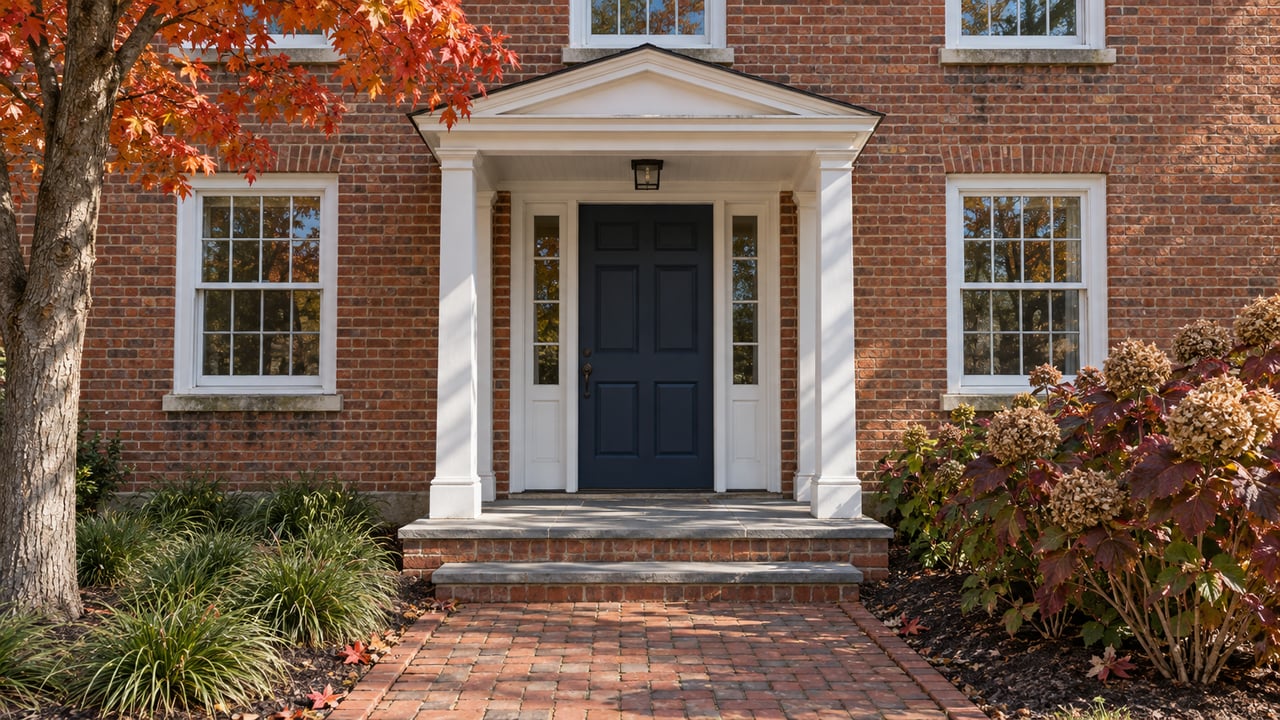
None of that is a complaint. It's a description of what a working farmland township actually offers. The people who live here aren't choosing South Harrison because it has more to do than Harrison Township or Mullica Hill. They're choosing it because the smaller footprint, the Colonial Revivals along Harrisonville Road, and the quiet that comes from 16 square miles holding just over 3,000 people are the point. A town doesn't need a second park if the one it has does the job, and it doesn't need its own private lake if the state-run one down the road is stocked and open to anyone with a license.
Understanding where South Harrison's boundaries fall, recreationally and legally, is a useful starting point for anyone considering a move.
If you're weighing a move into South Harrison, or out of it toward Mullica Hill, Swedesboro, or another corner of Gloucester County, that distinction between borrowed amenities and what a town actually has is exactly the kind of detail worth getting right before you commit to a neighborhood. The Pat Settar Team has spent years working these specific townships and can walk you through what each one genuinely offers, not what a generic guide assumes it does. Contact Us when you're ready to talk through it.
This article is general information, not legal, tax or financial advice. Consult a qualified professional about your situation.